The Black Law Initiative: working together towards a community-led future

Understanding the opportunity
The project concerns the section of Black Law Wind Farm on Forestry and Land Scotland’s Kingshill Plantation land. There are currently nine turbines on this land, with a combined capacity of 20.7 MW. They form part of the wider wind farm operated by ScottishPower Renewables.
The current FLS lease expires in 2032. Forestry and Land Scotland’s Community Access to Wind Repowering pilot gives eligible communities a dedicated opportunity to develop a request to lease the repowering site before commercial tendering.
This creates an opportunity to investigate a community-led approach to future development. Securing a land agreement, establishing a viable ownership model and obtaining the necessary permissions and finance would each require further work.
Bringing local organisations around one shared purpose
Community organisations understand the places they serve. They know where services are under pressure, which facilities need investment and what could make a meaningful difference to local people.
By working together, we can bring that knowledge into the project from the outset. A wider coalition can help identify community priorities, support consultation and develop an accountable approach to decisions.
The meeting on 24 September 2026 brought prospective partners together to discuss the opportunity and consider how they might participate. It was an important step in widening the conversation. The coalition’s membership, responsibilities and formal governance still need to be agreed.
At this stage, participation means helping to assess and shape the opportunity. Any future commitment to investment or construction would require a separate, informed decision.
Combining community knowledge with professional expertise
Forth Development Trust brings community development and programme leadership experience to the founding partnership. Soul of the Junction contributes commercial experience and practical knowledge of the Community Asset Transfer process.
These strengths will help organise the early work, but a wind energy project of this scale also needs specialist advice.
Grid access, planning, environmental assessment, land agreements, legal structure and finance all require professional expertise. The coalition’s role will be to commission and scrutinise that work, understand the findings and make decisions in the interests of the communities represented.
Engagement with Forestry and Land Scotland, CARES and Local Energy Scotland, and Community Ownership Support Service advisers will support this process. Constructive discussions with ScottishPower Renewables will also be important, particularly where existing grid infrastructure and other arrangements connect the FLS section to the wider wind farm.
Agreeing how we work together
Good intentions need clear arrangements behind them.
The project information pack proposes a monthly Steering Committee once the wider coalition is formed. Its membership, decision-making powers and responsibilities will need to be agreed by the participating organisations.
A separate project structure associated with Forth Development Trust is also being considered, subject to professional advice and coalition agreement. This would need to support community accountability, provide suitable authority to enter agreements and protect participating organisations from inappropriate liabilities.
The final legal form and ownership model remain open. They should follow from the evidence and the needs of the coalition.
Planning for lasting community benefit
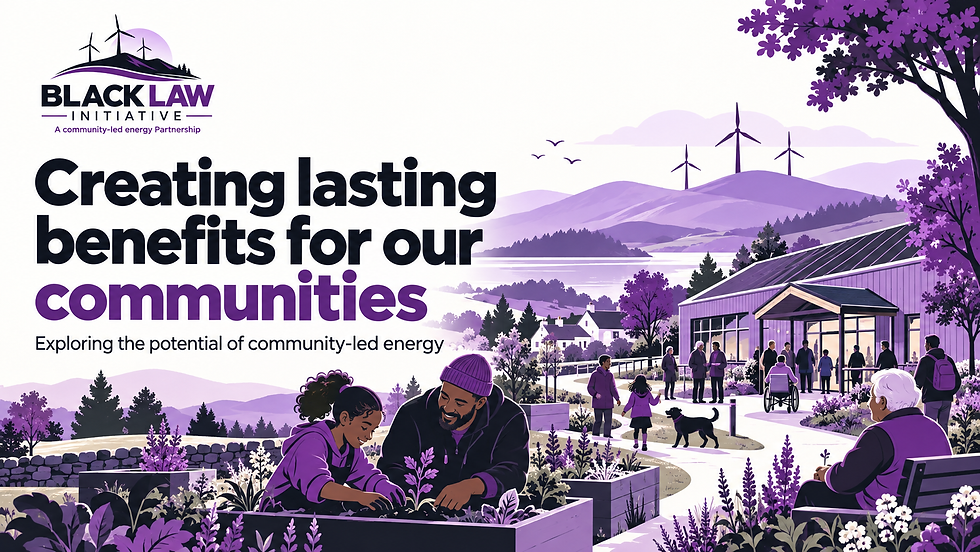
The ambition is to retain more of the value generated by the wind farm locally and use it to support community priorities over the long term.
If the project proves viable, future surplus income could contribute to local facilities, services, youth opportunities, wellbeing and environmental projects. The amount available would depend on the eventual development model, operating costs, finance and performance.
How any future revenue is shared will be a matter for the coalition to develop transparently, with community involvement. Fairness, community need, proximity and long-term sustainability are among the principles identified for discussion. No allocation formula has been agreed.

The work starts now
Although the current lease expires in 2032, the preparation must begin well before then.
The immediate priorities are to strengthen the coalition, progress development funding and prepare the Note of Interest to Forestry and Land Scotland. The working programme identifies December 2026 as the Note of Interest milestone, with the precise submission requirements to be confirmed with FLS.
Further stages would include feasibility studies, community consultation, an asset transfer request and negotiations over land and commercial arrangements. Planning, grid agreements and project finance would also need to be secured before any construction decision.
The timetable will develop as these questions are answered. The lease expiry in 2032 is a key milestone, rather than a confirmed date for new turbines to begin operating.
For the Black Law Initiative, collaboration means sharing the work, examining the evidence and giving local communities a meaningful role in shaping the opportunity. That is the foundation we are building now.

Economic Development Through Energy Projects
The Blacklaw Initiative also aims to stimulate economic development within the community. By investing in local energy projects, the initiative creates jobs and supports local businesses. This economic boost is essential for fostering a resilient community.
For instance, the initiative has led to the creation of jobs in various sectors, including construction, maintenance, and renewable energy technology. Additionally, local businesses benefit from increased demand for goods and services related to the energy projects.
Case Studies: Success Stories from the Blacklaw Initiative
To illustrate the impact of the Blacklaw Initiative, let’s explore a few success stories from communities that have embraced this collaborative approach to repowering.
Case Study 1: The Greenfield Community
In the Greenfield community, the Blacklaw Initiative successfully repowered an aging coal-fired power plant. Through community engagement, residents expressed their desire for cleaner energy sources. As a result, the initiative retrofitted the plant to incorporate natural gas and solar energy.
The outcome was remarkable:
Reduced Emissions: The new energy mix cut carbon emissions by 40%.
Job Creation: Over 100 jobs were created during the retrofitting process.
Community Satisfaction: Residents reported higher satisfaction with their energy sources and lower utility bills.
Case Study 2: The Riverdale Project
The Riverdale Project focused on integrating wind energy into the local grid. The Blacklaw Initiative worked closely with residents to identify suitable locations for wind turbines. The project not only provided clean energy but also became a source of pride for the community.
Key achievements included:
Increased Energy Independence: Riverdale now generates 60% of its energy from wind.
Economic Growth: Local businesses saw a 20% increase in revenue due to the influx of visitors interested in renewable energy.
Educational Opportunities: Schools in the area began offering programs focused on renewable energy, inspiring the next generation.
The Role of Technology in Repowering
Technology plays a crucial role in the success of the Blacklaw Initiative. By leveraging advancements in energy efficiency and renewable energy, the initiative can achieve its goals more effectively. Some key technologies include:
Smart Grids: These systems allow for better energy management and distribution, optimizing energy use.
Energy Storage Solutions: Battery technology enables the storage of excess energy generated from renewable sources, ensuring a steady supply.
Data Analytics: Analyzing energy consumption patterns helps identify areas for improvement and efficiency gains.
The Future of Energy Repowering
As the Blacklaw Initiative continues to evolve, its impact on energy repowering will likely inspire similar projects across the globe. The collaborative approach, focusing on community engagement and sustainability, sets a strong example for future energy initiatives.
Challenges and Opportunities
While the Blacklaw Initiative has seen significant success, it also faces challenges. Some of these include:
Funding: Securing financial support for large-scale projects can be difficult.
Regulatory Hurdles: Navigating local and national regulations can slow down progress.
Community Resistance: Not all residents may be on board with changes, requiring ongoing dialogue and education.
Despite these challenges, the opportunities for growth and improvement are vast. By continuing to engage with the community and adapt to changing circumstances, the Blacklaw Initiative can pave the way for a more sustainable energy future.
Conclusion
The Blacklaw Initiative exemplifies a collaborative approach to repowering that prioritizes community involvement, sustainability, and economic development. By focusing on these core principles, the initiative not only enhances energy efficiency but also fosters a sense of ownership and pride among residents.
As we look to the future, the lessons learned from the Blacklaw Initiative can serve as a blueprint for other communities seeking to navigate the energy transition. By embracing collaboration and innovation, we can create a cleaner, more sustainable energy landscape for generations to come.
Call to Action
If you are part of a community looking to explore energy repowering initiatives, consider reaching out to local organizations and stakeholders. Together, you can create a plan that meets your community's needs while contributing to a sustainable future.

Comments